Showing posts with label memoirs. Show all posts

Monday, September 23, 2013

On being a soldier

Having a beer to relax and forget, if only for a moment in war


Whether a person is in a war or not, those of the past and those of the present, emotions about war always run high, either for or against it. Do you want to know, first hand, how those who were in it feel, ask them.  The responses, like the emotions, will vary greatly from, 'I'm trying to forget, I'm not talking about it anymore, or I just cannot explain it."  The last one if very prominent because most military people will tell you: "Unless you were there, you cannot understand it all."  This response is probably the truest of all.  The biggest reason those who served in a war will not talk to civilians about it. They simply cannot understand it. 


"I'll be the first to admit that in Nam, probably in any war, events that would seem strange or bizarre back in The World, were just viewed as normal. Events you just cannot explain to anyone who hasn't lived through the chaos of war because they'd never understand. You had to be a witness to those events to get the full grasp of their meaning." (quote from my book: A Date With Vietnam.

The thing is; no one wants to fight a war, no one wants to kill people, (sometimes in a slaughter), no one is used to, brought up to, or even really trained well to, just get used to what they see in a war.  Yes, some are more adept at it than others, but no one, no matter their circumstances, is prepared to see their buddies and best friends killed in front of them either. 

But should we all 'forget' any wars simply because they are 'distasteful'?  Well show me a 'tasteful' war and I will say: "Sure, let's forget all the rest of them."  But I know there never has been nor ever will be a 'tasteful' war.  Each year we commemorate the Revolutionary War, the one fought for America's independence.  I'm sure those who fought that one would never have wanted us to forget that lives were lost and lives were changed forever and people died for it.  In ALL wars, people die and they die in large masses.  As the war machines have improved, more and more people die in huge masses, on both sides.  I would never tell the loved ones of someone killed in a war: "Well, just forget it."  That would be crass and highly rude. 

We tend to forget there is no 'faceless enemy' no matter what war you think of.  We forget that even the perceived enemy comes from a family and has loved ones too.  Even the enemy's life is changed forever.  We are friends with Japan, yet America used a weapon of such mass destruction on that country so terrible that it not only changed lives, it literally changed landscapes, forever.  

Each generation goes to war hoping their children never will have to.  We forget the pettiness of governments to ever be able to get along, so each generation must do the bidding of those in power, to fight a war in a country for whatever stupid reason, and for land that the military person will never control.  They fight it for someone else. Yes, governments want us to believe it is for 'our freedom' but is it really?  Doubtful. 

I say: "Do not ever forget those who fought the wars."  Protest, if need be, for veterans to not be homeless, to not get bad care from a VA hospital or outpatient service.  You know a veteran?  Be kind to them, show kindness, and remember: When fighting for their rights, you fight for your own as well.  You do not have to ask them to describe war, it's difficult even for the veteran to understand it all, but just be kind and make governments stop treating them, and us all, like we do not exist.  A veteran should not be homeless from ailments caused by a war they showed up to fight, for an ungrateful government that would like to toss them out like yesterday' trash.  Veterans showed up when called, the government needs to do the same, to step up to the plate for them.  Hell. America cannot even step up to the plate for fire fighters, police people, or emergency workers who helped in 9/11.  This attitude Must Stop!


My latest book tries to explain why and how anyone would fight a war.  I cannot do all veterans justice because it is complicated, indeed.  But I do my best.  I hope I succeeded in some small way.


Available right now on: Kindle


Saturday, April 20, 2013

The Healing powers of Your Story


I have always been a firm believer that everyone has a story to tell.  Why do I think that?  I know this to be true because even if people have shared similar experiences, like war, poverty or family tragedy, each person's experience is unique to them.  

I could be in the same war, same natural disaster but I will see it totally differently.  My experiences will cause me to see things in a different light than even a person standing next to me. 

That being said, it is good to write about our lives, about what we personally have been through, how we may or may not have handled the situation.  By writing, by sharing, we just may touch on the heart string of another reader who has or is now, going through something so similar that they are changed, forever, by what we have written.  Is everyone an excellent writer?  Maybe not, but writing your story isn't as complicated as you might think.  With self-publishing these days, I know that what you might see as ordinary in your lives, can now reach hundreds maybe even millions of readers.  I love self-publishing because I think the reading public is not stupid.  I prefer to let the readers decide what they like, not some publisher who chooses for them.

I have assisted people in editing, arranging and telling their stories.  I enjoyed it very much.  Why?  Because while helping a writer arrange their thoughts and notes, I have read some very touching stories.  I am going to show you some great examples of that.

My husband's book is at the top of this blog.  While I may be a bit biased on his, I can assure you it is somewhat a universal story about war.  About one soldier's experiences of a war that has been such an embarrassment to the United States government, that for a very long time, the government tried to bury it and pretend it never existed.  Kind of like the WMD fiasco that has now drawn us into wars where we do not belong, to this very day.  Steve tells about his experiences in Vietnam, how it's so easy to be drawn into a war and hate faceless enemies.  But once there, once he got to know the people of that country, it became increasingly harder and harder to hate people who did nothing to us personally.  He tells of the fears soldiers face when fired upon, how most soldiers, from both sides, will shoot others more from fear than from hatred.  How propaganda about the perceived enemy, is the driving force behind all wars.  He tells why he chose to make the military his career and why he chose to become a Drill Instructor to be able to teach all soldiers how to survive when faced with combat.  I'm sure anyone will love his story. 


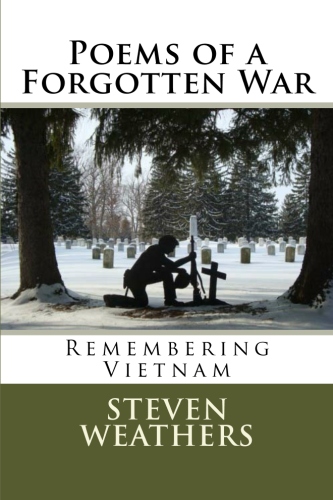
 Poems of a Forgotten War is a series of Steve's feelings about a war he participated in.  They express how he felt.  Sometimes torn, sometimes he loved the country, sometimes not so much.  But they can certainly express how many people in a war feel about those sometimes mixed emotions.  Did he have regrets?  Well, does anyone ever experience anything as emotional as war and not have regrets?  Vietnam may be in the past, but stories he has read about concerning our recent wars are similar.  So he has come to the conclusion that war is war, no matter the era in which it takes place.  These are poems that modern military people can relate to.


The nursing home book is my story.  I guess you can call it my baby.  I've worked with the elderly in nursing homes for a long time.  I've worked with the elderly in the community for a long time too.  This is a book about my observations of the situation that many elderly find themselves in when they are too frail to take care of themselves at home.  It is a tale of many people facing this situation.  Some like nursing homes, but far too many hate the experience.  I try to explain why people hate it, what causes them to feel like it's hopeless.  But I also tell how and why, it can all change, if people stand up and demand changes for the better.  I explain how the Federal Government and state governments think throwing money at the problem should change it.  It doesn't.  But I also tell of the Culture Change movement taking place in America right now.  I explain how it can change for the better and why it should change.  I'm hoping everyone will read it, learn from it and I hope they will demand changes and understand that the government is not the hope for changes they might have expected them to be. 


I have one more story to share.  I'm hoping this writer will not mind my sharing it.  I chose it because it is so powerful, I think everyone should read it.  This story is set in a time when home health for someone who is dying of cancer, did not exist.  This writer tells about a time when a woman, her own mother, had to experience the shame of having a child out of wedlock.   She tells of growing up and feeling she was hated by her own mother.  How she, as a very young child, had to care for a mother who was so sick, she almost felt overwhelmed by it all.  But most importantly, it is a story of healing.  A story of coming to understand that it was not her that her mother hated, but it was the situation her mother found herself in, that was the object of her hatred.  She tells of a mother who was so proud and strong, she felt like she lived in her mother's shadow as a child.  A very unique story that anyone who may not have the perfect parent, can relate too.  I hope you will take time to read it.  The author related to me how just telling her story has given her the emotional healing she so desperately wanted and needed.  A good author, a powerful book.

I hope you have enjoyed reading about the healing power of stories.  Do you have a story to tell?  If so, I'd be happy to help anyone compile their story into a manuscript.  Yes, I charge, but I charge far less them others and far less than you might think.  I can work on a sliding scale. 

Thank you for reading this blog. 

Sunday, April 7, 2013

Soldier, one day you will grow older

             
                              The soldier then


When young we know no boundaries

We come to war from factories, offices and foundries

Hormones and patriotic feelings abound

That's a mix of energy to be used in leaps and bounds

The youth factor is what the military count on

"Step up here, we will help you release that energy, Son."

We feel patriotic, we think, we will win a war, what fun

Not one recruiting brochure tells you; When you're done, you're done.

That's the important part they always leave out, Son

We survive, we come out alive

We then grow older, we grow much bolder


The veteran now

We finally see war without all the fog

Plenty of memories in our brains we have logged

Don't resent those who don't understand

I highly doubt if anyone fully can

What we've seen as soldiers can only confound it

Even we who were there cannot fully wrap our minds around it

Those who've not seen aren't being mean

When you actually stand on the turf, it isn't so green

Given the small facts we were given back then

I'm sure, as young men, we would all do it again


Available on: Amazon.com
Barnes&Noble.com
Kindle


Soldier you are not forgotten

                                                  photo: Steve Weathers


Soldier, you are not forgotten

I once served in an entire war, all but forgotten

Forgotten, forgotten, your government treats you rotten

But always remember, by other veterans, you aren't forgotten

I know how those dreams make you feel

I know how those memories, night sweats, make you reel

Bad sights, into your dreams they steal

Don't feel bad, don't feel sad, you really haven't been had

Don't give up or give in

You haven't committed the greatest sin

We joined, for whatever reason

We joined in good faith, we served for a season

Don't think it is all in vain

Even if it's hard to see past the pain

How could you know?  How could I know?

We signed up in good faith, why did we go?

We thought it was the right thing to do at the time

Friends, relatives, thought we lost our minds

Don't give up, don't close your door

We all; veterans, support you, from shore to shore

Feeling bad, feeling sad?

Contact me, together we can once again feel glad

For what it's worth, the pain is great, I know it hurts

You can't redo your past

Decide to go on, do it fast

The pain sometimes feels it will last and last

Together, Soldiers, this hurt we can get past

Reach out, to other vets, those you know, some you don't

Don't suffer alone, don't close your door

We as veterans, know, it was a hell of a war

Some say: "You knew the score."

But have they ever been to a war?

Reach out, veterans young and old

We are here to help, we all exist from shore to shore

Together we can stop a war

Let our new war cry be: "A war?  Oh never more!"

They need to listen to us who have gone before


Friday, March 22, 2013

The poor make war on the poor


Just exactly who makes war?

Generals, Congress, Rich men, of course

Just exactly who fights the actual war?

It ends up becoming the poor against the poor

Is this a poem of 'let's hate the rich?'

No, but you don't have to be anyone's bitch

Harsh words you might say

Well away from killing, plundering and hate you must stay

What have the poor of another country done to you?

Try to see their point of view

Would we like to be preyed upon right here?

For some soldiers to ruin what we might hold dear?

As young soldiers we think war is a grand duty

But all we do is add to someone's rich booty

War and death isn't what you do as a lark

War isn't exactly a walk in the park

But as young people we never listen to the older one

We just think, it's different, so we pick up that gun

Maybe we don't get every gory detail

Explaining war in words is where all words seem to fail

How do you put into words what war is about?

How does a soldier adequately explain what war is about?

I wish you would listen, young man, young woman

Because war is not the noble cause for freedom like you heard

But war's horrors cannot be placed into any word


Books available on:
Kindle
Barnes&Noble.com
Amazon.com


Thursday, March 21, 2013

A Boy a War and a Dream


Available on: Amazon.com
Barnes&Noble.com
Kindle


All wars will once be forgotten

Even though that fact seems rotten

War, like tides, ebb and flow

They are hot when they are hot, and not when they are not

We rush to them with anxious feet

We roll out the bugles, the drum strikes a beat

They come, they go, they eventually run cold, as you know

I was a boy, like so many these days

Anxious to grow up, to become a man, a soldier was my way


A young soldier in search of myself


We can hate wars, as we well should, but this boy grew up

I grew to know all people are real, they hate,they love, and eventually heal

As new soldiers are finding out

War cries start with a shout

But they too will come to know, wars on a land they come and they go

On a land is one thing, the bombed acreage and sites heal

But to many a soldier, wars, well your youth, your sanity they can also steal

I cannot tell you about horrors of any war

Most don't believe me, they have to sail to that shore

You cannot prepare for any battles or fights

But I assure you, wars are all a terrible sight

So wars start with a cry and a shout

They start with a bugle charge and a drum roll

But believe me when I tell you, on you, young soldier, the rest of your life a war takes its toll


Saturday, January 19, 2013

A Young Soldier's Journey to Find Himself


I was very conscious of how out-of-place I felt in school anymore. I never really liked high school much anyway, I never really fit in with the jocks. You know, those guys who eat, drink and sleep sports and take it all too seriously. I knew, even then, that beyond high school, those guys, who had once been big men on campus, would just become ordinary people as soon as they graduated. I was never very athletically inclined. I had tried out for the football team once, played one game and immediately decided it was not for me.

 A lot of the kids in high school were headed either for farming or college. Those kids had a purpose for staying in school and graduating.
My parents were poor, we didn't own a farm, just a house and ten acres with woods. I knew my parents couldn't afford college and frankly, the idea of four more years in a learning institution just didn't hold any appeal for me. Too boring.

I was much more interested in cars than sports and books in those days. But in Indiana, sports and farming was everything, especially in high school so that pretty much left me out of the ‘cool’ loop. I had great grades in school until I reached high school and decided what I'd rather be doing in life, which wasn't hitting the books.

Besides, I thought the guys who liked cars were much cooler anyway. I could relate to cars. Cars were something tangible, steel and chrome you could touch and work on. I was able to see and feel the satisfaction of a job well done when I worked on a car that had stopped running. Maybe there were no trophies involved, or a sweater with a letter on it, but there was a feeling of deep accomplishment from fixing and customizing a beautiful car.


In the 1960's cars were everything.
Everybody wanted to be seen in a hot car, even farm boys, jocks and yes, girls too.

The part time job I had recently landed as a bag boy at the local Kroger’s grocery store gave me a small taste of the adult world. In summer, weekends and holidays off, while those other kids were hanging out at drive-ins trying to pick up girls, I was helping little old ladies with groceries to their cars. But even that bit of responsibility was not enough for a boy in a hurry to grow up, the small responsibility of that job only made me hungry to experience more of what the world had to offer.

I felt like most of the crap they were teaching in school was junk I’d likely never be using in real life anyway. I fancied myself as older than my high school peers. Maybe not in years, but in my mindset. Just about everything they thought was important, I viewed as being useless.

I already felt that what was important in high school, would matter very little in the real world. 

Growing up, I had jobs as young as age 12. I picked berries one summer to earn money, later on I delivered newspapers every day after school and on weekends. I was used to hard work, the kind of physical labor you do with your hands, not always your head. 

 I think seeing my parents work so hard all the time, I grew to appreciate the value of it all and the value of money. Oh, I was smart enough, but school just couldn't hold my interest long enough for me to care about it much.


Available on:

Amazon.com

Kindle

Barnes&Noble.com

Friday, September 2, 2011

On writing

Writing can be very satisfying,but it is also quite isolating. Whenever I'm working on a book and I decide to do something else; i.ego to dinner, sit by the lake enjoying the day, I start to feel guilty and I need to just get over it.


I give myself deadlines for getting my books completed, because, frankly, if I did not, I'd procrastinate something fierce.  So I end up writing, and writing, in the wee hours of the morning, in the afternoons and I need to give myself more breathing room.


Can a person edit their own material?  Well, yes, if you know what you want to say,and if you have the patience to go line by line, very slowly.


Memoirs can be difficult because most of us have them either in our heads, or in a journal form, both of which can be difficult to glean into a manuscript form, which would be interesting for anyone to read, and that is a difficult task.


When writing, we have to remember, steamy love scenes can make us blush, but also remember, your mom isn't looking over your shoulder, so you can be unfettered when describing them.


The most difficult thing when writing about our selves is, we have to remember no one is going to judge us about our past decisions.  So if you can take your most embarrassing  or your most not proud of yourself, moments, place them on paper and allow the world to read the real you, that is half the battle.  Remember that how you felt or reacted in an unflattering light, is still your reaction and your feelings, do not be afraid of them.  People could judge, but really, do you know those readers personally?  No you do not.  So let your feelings flow and share when you are not always proud of how you felt, but you did feel like that and somewhere, someone will relate to you being human. 


Happy writing.